Stop Motion Animation
1. What Is Stop-Motion?
Stop-motion is a filming technique in which a stationary object is moved slightly and photographed frame by frame; works created using this method are called animations. Not only drawings and puppets, but also footage of real people captured using stop-motion is referred to as animation.
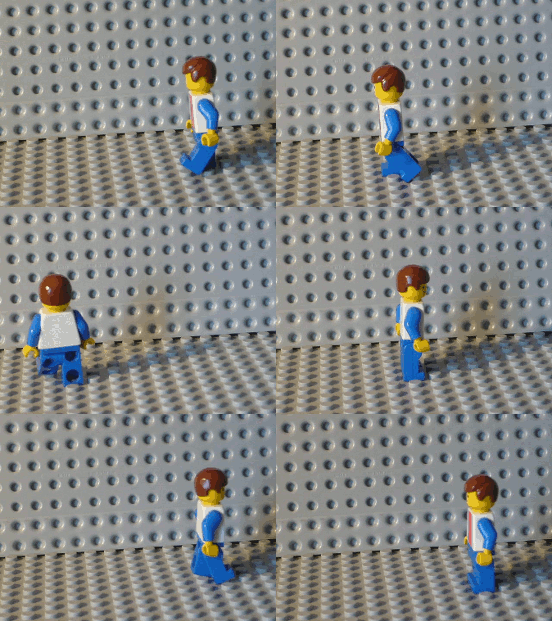
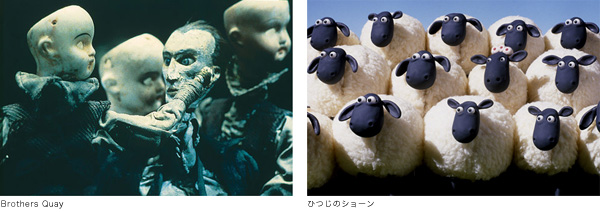
Clay animation and puppet animation are prime examples of stop-motion animation. Works are being produced that make full use of the unique movements created by stop-motion. In recent years, rather than relying solely on stop-motion, works incorporating digital technology and computer graphics have also been released, leading to a diversification of film production techniques.
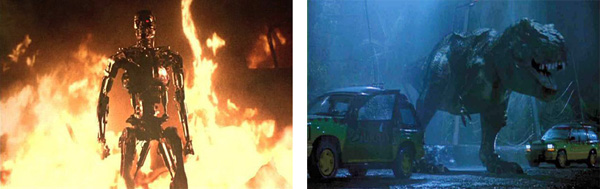
Before the advent of modern digital video technology and computer graphics, many films used stop-motion animation, in which puppets were filmed frame by frame and then composited with live-action footage (e.g., [The Terminator](http://ja.wikipedia.org/wiki/%E3%82%BF%E3%83%BC%E3%83%9F%E3%83%8D%E3%83%BC%E3%82%BF%E3%83%BC_(%E6%98%A0%E7%94%BB) (1984), Jurassic Park (1993), and the films listed in the “List of stop-motion films”).This filming technique, along with the use of suits and models in Godzilla and the animatronics in Alien, is referred to as special effects (SFX).
2. Visual Expression Through Stop-Motion Animation
Stop-motion is, after all, merely a filming technique, and the forms of expression it gives rise to are diverse. Here, we will introduce several films created using stop-motion.
Norman McLaren, “The Neighbor” (1952)
Ishu Patel, “The Bead Game” (1977)
Takashi Ito, “SPACY” (1981)
Takeshi Usami, “Gluebe” (2007)
BLU “MUTO” (2008)
Oren Lavie, Yuval, and Merav Nathan, “Her Morning Elegance” (2009)
Yasuhito Takeuchi, “The Wolf and the Pig” (2009)
Guillaume REYMOND “Pac-Man” (2010)
The Winter Olympics - Trailer
BBC WINTER OLYMPIC GAMES - BEHIND THE SCENES
The White Stripes - Hardest Button To Button (Official Music Video)
A music video by Michel Gondry, the maverick of the music video world
“JUNK HEAD”
HIDARI (Pilot Film)
A stop-motion animation film directed by Shinji Kawamura. Currently seeking funding through crowdfunding.
3. Bullet Time (Time-lapse, Machine-gun shooting)
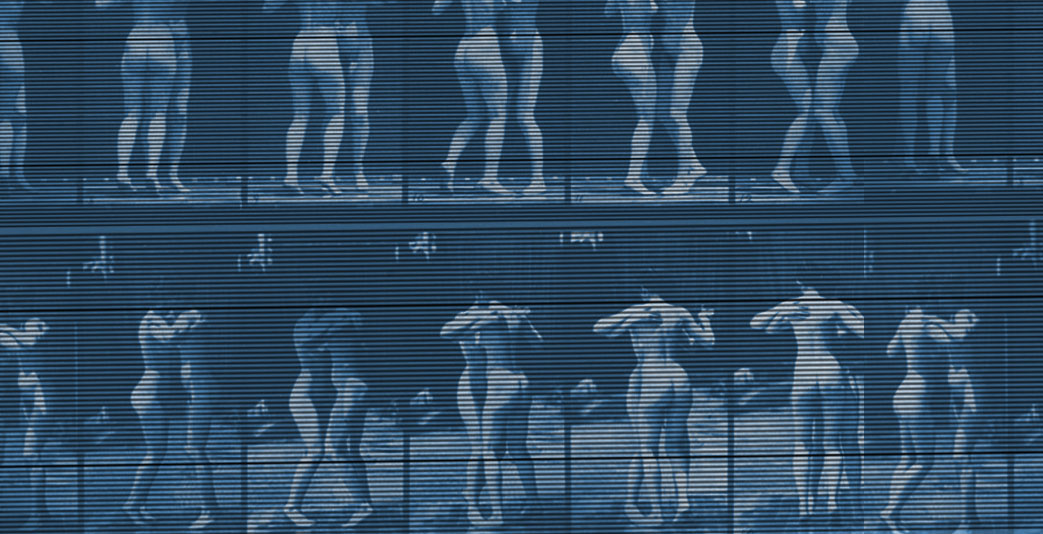
One of the most notable techniques in the movie The Matrix was Bullet Time (also known as time-slice or machine-gun photography). It is said to have originated with A Horse in Motion, photographs taken by Eadweard Muybridge in 1878 (the banner image on this page is also by him), and is a visual style that emerged from the accumulation of ideas from various works that followed.
As you can see from the making-of footage, this is a filming technique that treats video not as a continuous stream of motion, but as a sequence of individual frames; it is a form of expression born from the fusion of analog and digital technologies.
If you put in the effort, you can create it using just a smartphone.
The video below shows a scene from the BBC TV series “Sherlock.”
4. Various Stop-Motion Techniques
4.1 Stop-motion in the Film Era
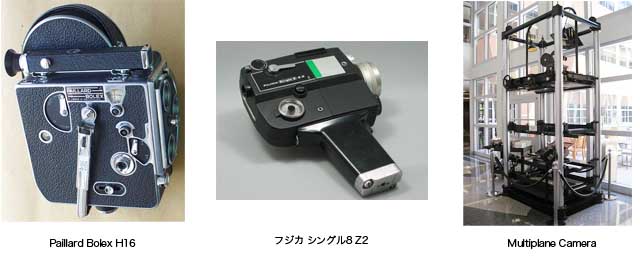
Unlike devices designed primarily for video recording—such as video cameras from the magnetic tape era or today’s digital cameras—film cameras from the analog era were originally designed to capture a continuous sequence of still photographs through mechanical means, and many models allowed users to adjust the shooting speed (the number of frames captured per second; referred to as “frame rate” since the advent of video).Not only 35mm cameras for theatrical use, but also 16mm cameras used for news coverage and independent films before the rise of video cameras often had stop-motion capabilities, and even consumer 8mm cameras could be set to shoot at a speed of one frame per second to create stop-motion footage. In particular, cel animation uses a specialized type of camera called a multi-plane camera.
4.2 Stop-motion-specific equipment (legacy equipment)
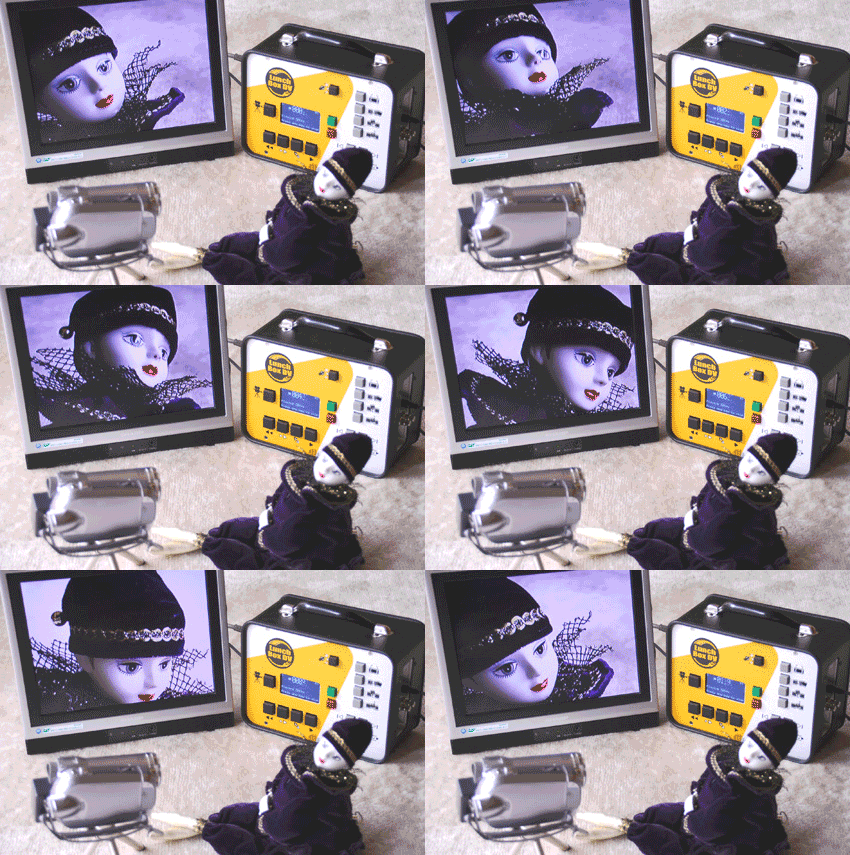
One device from a time when video editing on a PC was difficult was the Lunch Box (Japanese distributor [discontinued, priced at 420,000 yen]; U.S. headquarters). By simply connecting a camcorder (SD quality) to a monitor, users could create stop-motion animations.
4.3 Stop-motion Animation Using a Smartphone
Nowadays, anyone can create stop-motion animations using nothing more than a smartphone or tablet.
4.4 Dragonframe (PC-based stop-motion)
https://www.dragonframe.com/showcase/
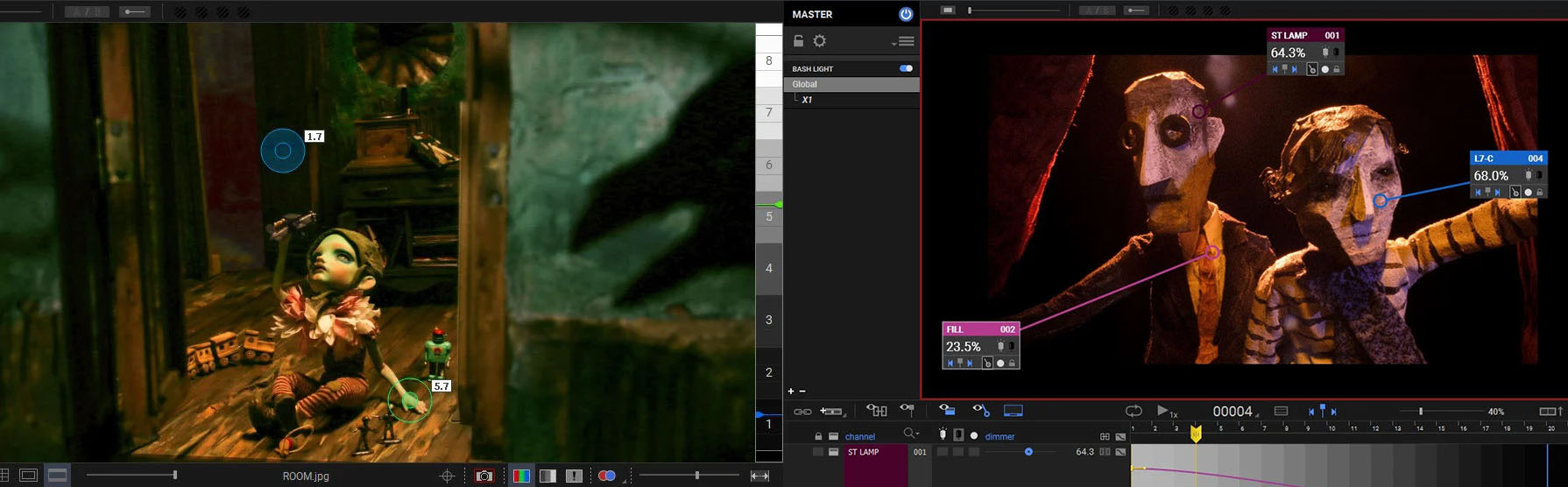
A high-performance, professional-grade stop-motion software that supports lip-syncing to audio, DMX lighting control, and Edelkrone motion-control cameras. Using the DRAWING TOOLS feature, which helps determine how much to move the subject, you can easily capture movements that would otherwise be impossible without a professional animator. Stop-motion artist Yasuhito Takeuchi also uses this software. The price is approximately $120 for an annual subscription.
5. Interval Shooting
Interval photography is also known as slow-motion photography, time-lapse photography, or simply “time-lapse.” While it can be described as taking a series of still images at regular intervals, the unique visual effects created by these extended time spans are used in a wide variety of works. It is commonly used to capture the growth of plants, the blooming of flowers, the movement of clouds, and the flow of car lights through a city at night.
Henry Jun Wah Lee’s work is particularly stunning. It looks as though motion-control cameras were used in Henry Jun Wah Lee’s work. Though it might just be manual dollies or cranes.