3D Scanning Overview
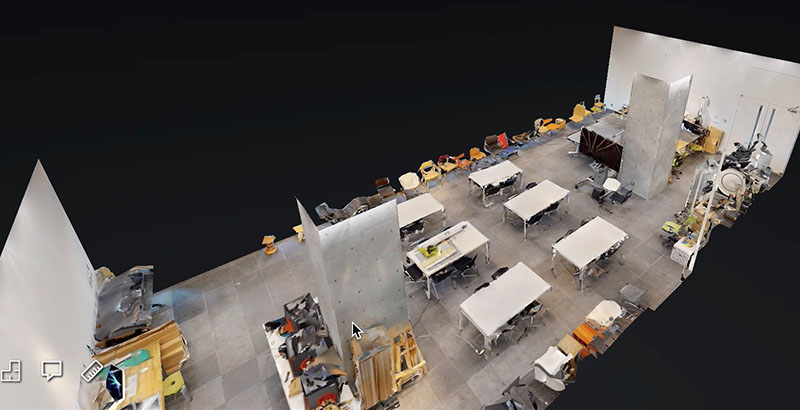
1. What Is 3D Scanning?
Rather than modeling from scratch in 3D CAD or CG software, 3D scanning technology—which allows real-world objects and spaces to be digitized—is beginning to be utilized across a wide range of fields. Its applications are expanding into every sector, including film, gaming, product design, fashion, architecture, medicine, and archaeology, enabling visual representations, new manufacturing methods, and the analysis and archiving of objects that were previously impossible.
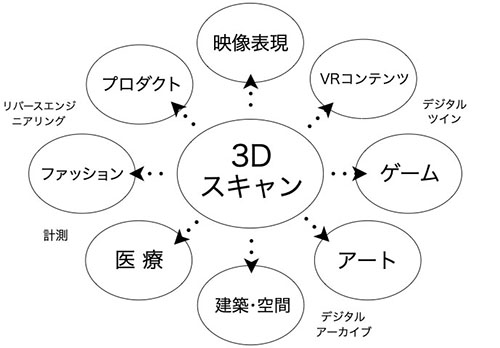
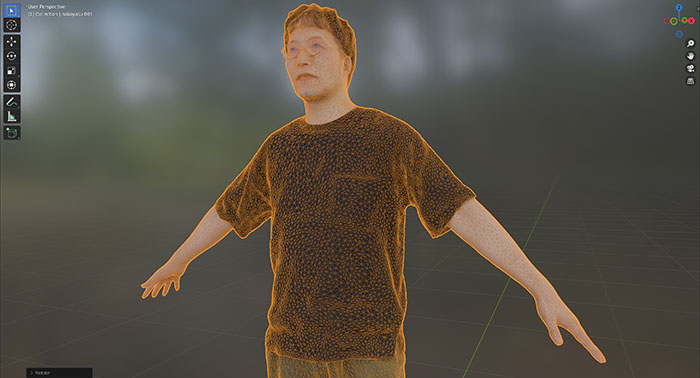
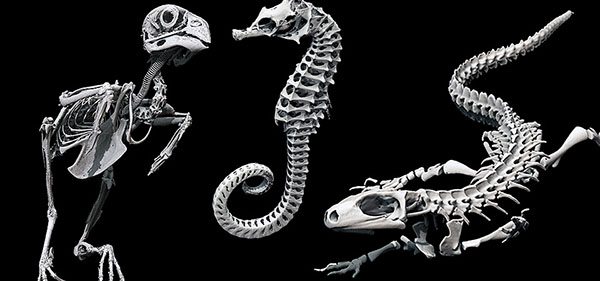
Technically, there are several methods of 3D scanning, including laser-based, image sensor-based (photogrammetry), and LiDAR-based approaches. Depending on the subject being scanned—such as objects, humans, animals, buildings, or terrain—there are various types of 3D scanning devices, including handheld, photo studio, 360-degree sensor, and drone-based models.Furthermore, by using methods that scan cross-sections, such as CT scanning, it is possible to convert complex shapes—such as plants—and the internal structures of living organisms, like insects, into 3D data.
The figure below illustrates a photogrammetry method for analyzing feature points in an image.
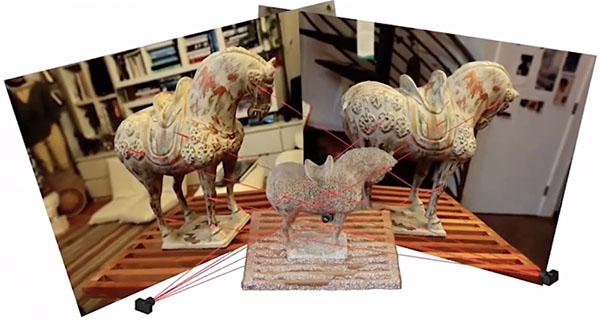
(Source) What is Photogrammetry (Autodesk Recap Pro)
2. Case Studies
2.1 Laser Scanning of Notre-Dame Cathedral
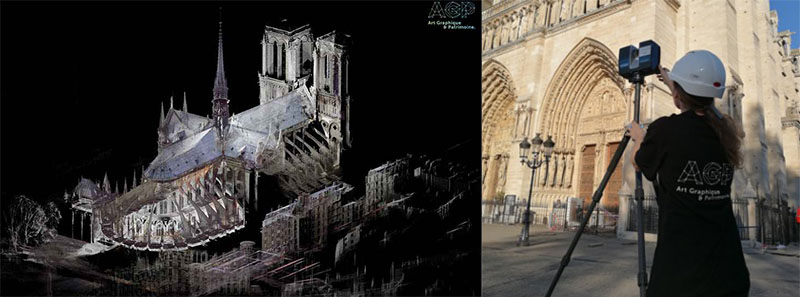
A project (2014–2016) led by France’s Art Graphique Patrimoine (AGP) and Dr. Andrew J. Tallon, an associate professor and art historian at Vassar College in New York. Although the project did not receive much attention at the outset, a fire in April 2019 served as a stark reminder of the importance of documenting historic buildings through 3D data.
(References)
- AGP - 3D Scans Come to the Rescue of Notre-Dame
- Wired - 3D Scan Data Begins to Be Used for the Reconstruction of Notre-DameCathedral
- Leica - Precision Laser Scans of Notre-Dame Cathedral Can Help to Preserve and Rebuild
2.2 Gunkanjima 3D Project
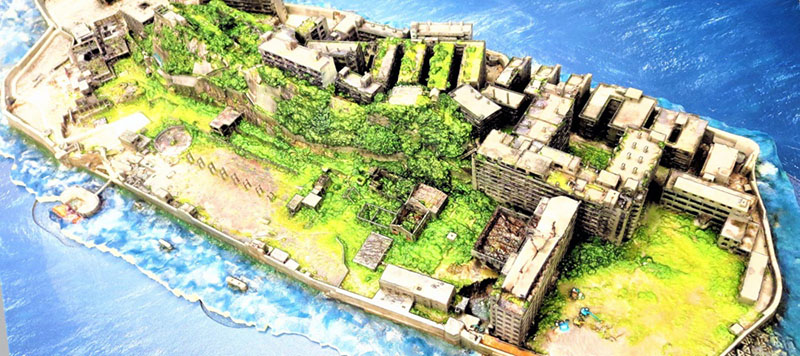
A project by Mr. Toru Izumi (Measurement Research Consultant Co., Ltd.). The image above shows a 1:480 scale model of Gunkanjima, a World Heritage Site. The team conducted 3D measurements of the World Cultural Heritage site “Gunkanjima” using drones and other equipment, and then produced the 3D print using a Mimaki Engineering 3DUJ-553 full-color 3D printer.
(References)
- The God of Construction: Who Is Toru Izumi, the Architect of the Gunkanjima Boom?
- A Digital Archive of Gunkanjima Using 3D Technology: From the Past, Through the Present, and Into the Future, Construction Machinery & Engineering 69 (8), 66–70, August 2017
2.3 The Community-Driven Shuri Castle Digital Restoration Project
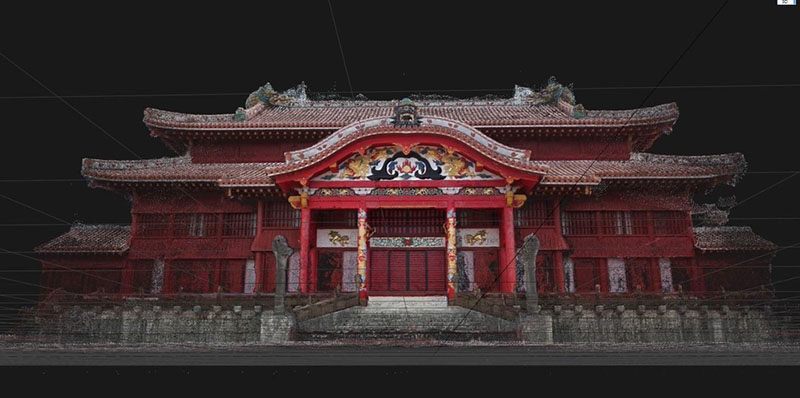
In October 2019, the Grand Hall of Shuri Castle—a structure with a 500-year history—and two adjacent buildings were destroyed by fire in Okinawa Prefecture. Immediately afterward, a group of volunteers launched a project to digitally reconstruct the site as it appeared at the time, with the aim of aiding future physical restoration efforts.
(References)
2.4 3D Scanning at the Urban and Global Levels
3D scanning on a city-wide and global scale has also begun.
(References)
- Ministry of Land, Infrastructure, Transport and Tourism (MLIT) Plateau https://www.mlit.go.jp/plateau/
- https://www.simplex-mapping.com/projects
2.5 Virtual Museum
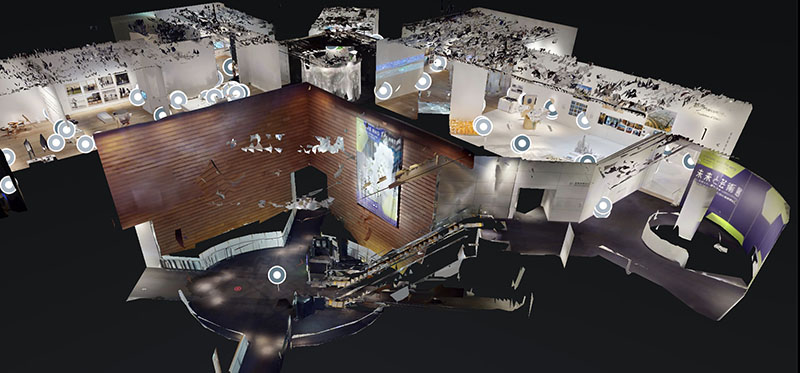
During the COVID-19 pandemic in 2020, all events involving large gatherings were canceled. Amid this situation, it was demonstrated that by 3D scanning exhibition facilities such as art museums and converting them into virtual environments, it was possible to create highly immersive content. In particular, with the emergence of systems like Matterport, which enable rapid 3D scanning and content creation, the technology has expanded beyond just virtualizing events to practical applications in various fields, including use on construction sites.
(References)
- Artlogue - Mori Art Museum Releases 3D Walkthrough of “The Future and Art” Exhibition
- Matterport Content - Mori Art Museum “The Future and Art” Exhibition Virtual Walk
- Experience Yayoi Kusama’s Major Solo Exhibition Virtually: German Museum Releases Walkthrough
2.6 Reverse Engineering
2.7 Examples in Water
The Titanic on the Ocean Floor
Marie Agnes (an old mine in Poland)
(References)
- Marie Agnes. Underwater photogrammetry survey of a silver mine
- CNN - Recreating the Titanic on the seabed with “the largest underwater scan in history”
- NATIONAL GEOGRAPHIC: The Revolution in Underwater Archaeology, Part 3: Photogrammetry and What Lies Beyond
- MURAKUMO, an underwater 3D scanning robot
2.8 Biophotogrammetry
- Beauty That Lasts Forever! The World of Biological Specimens Becomes More Accessible Thanks to New 3D Digital Technology from Kyushu University
- Kyushu University - A World First: Over 1,400 Realistic “3D Digital Biological Specimens” Now Available to the Public (Accessible to Anyone via the Metaverse and Virtual Reality)
2.9 X-ray CT Scan
2.10 Case Studies in Art
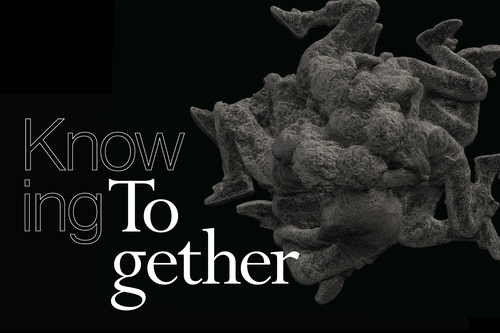
Knowing Together: An Experiment in Collaborative Photogrammetry (Introduced in class)
https://doi.org/10.1145/3306211.3320139
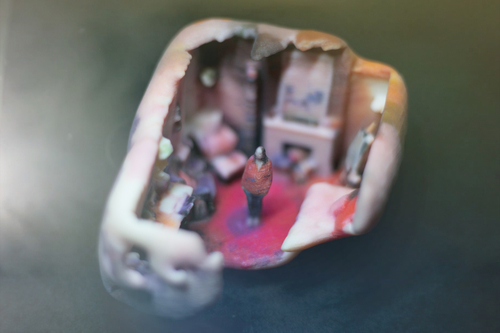
Watertight (introduced in class)
https://doi.org/10.1145/3306211.3324026
2.11 Examples of Applications in Gaming
3. Types of 3D Scanning Software
3.1 Agisoft Metashape
Photogrammetry software developed and sold by Agisoft. It is available in Professional and Standard editions. It is compatible with Windows, Mac, and Linux environments. The Japanese distributor is Oak Co., Ltd. Detailed information, including usage instructions and techniques, is available in Japanese on Oak’s website (URL below). https://oakcorp.net/agisoft/

3.2 3DF Zephyr
Photogrammetry software for Windows developed and sold by 3DF Flow. It is available in four versions: Free, Lite, Pro, and Aerial. Although the Free version has limited functionality, it can process up to 50 photos. Please note that the Lite trial version is different from the Free version.
DF Zephyr Free Version Page: https://www.3dflow.net/3df-zephyr-free/

3.3 RealityCapture
RealityCapture is considered the industry-standard photogrammetry software. It was acquired by Epic Games in 2021. For PGM, ENT, and CLI plans, a range of options are available to suit users’ needs, including monthly or annual subscriptions, perpetual licenses, and PPI (Pay-Per-Point) services based on the number of points processed.
https://www.capturingreality.com/

3.4 Autodesk ReCap Pro
Photogrammetry software for Windows developed and sold by Autodesk. Students and faculty members can create an Autodesk account to use the academic version (free of charge).
https://www.autodesk.co.jp/products/recap/

3.5 Comparison of Software Accuracy
3.6 Apps for Tablets and Smartphones
In addition to PC software, there are also numerous apps available for tablets and smartphones. SCANIVERSE, listed below, is one example.

(For your reference)
- An in-depth look at the popular 3D scanning app [Scaniverse]! ~ Can it be used for surveying in civil engineering and construction? ~
- [Unofficial] A comprehensive guide to using Scaniverse [iPhone 3D Scanning]
3.7 Affordable, High-Precision Scanning Equipment
4. The Emergence of New Analytical Methods
3D Gaussian Splatting
NVS (Novel View Synthesis) is a technique that enables the creation of new images from different viewpoints based on existing images or videos, allowing for the generation of footage and images from perspectives that have not actually been captured. One of the challenges with NeRF (Neural Radiance Field), a method within NVS, has been the time and cost required for training and image generation.
3D Gaussian Splatting (3D-GS) is a method for creating 3D scenes from multiple photographs. It generates 3D models by representing 3D objects as a collection of 3D Gaussian points; however, because it is a method specialized for still images, it was not suitable for video. At SIGGRAPH 2023, an improved version of 3D-GS was presented, making it increasingly possible to generate 3D spaces and models from video in real time.
References)
- reshot.ai - 3D Gaussian Splatting
- 3D Gaussian Splatting for Real-Time Radiance Field Rendering - SIGGRAPH 2023
- “4D Gaussian Splatting”: Generating “Dynamic 3D Scenes” in Real Time from Ordinary Video
- 4D Gaussian Splatting for Real-Time Dynamic Scene Rendering